Cover of AI Operations

Book 10 · Presentation

AI Operations

How Artificial Intelligence Transforms IT Operations in European Enterprises and Public Authorities

74 slidesPowerPoint · 3.8 MB

Download the deck (.pptx) Read the book online

All presentations / AI Operations

All slides

Select a slide to see it larger; use the arrow keys to move through the deck.
  1. Slide 1: AI Operations1
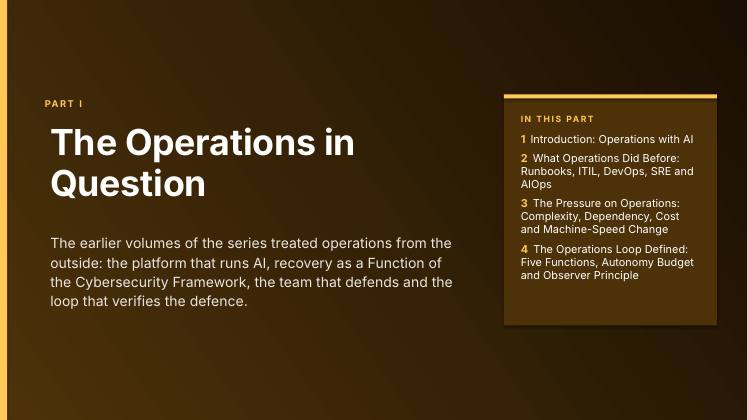
  2. Slide 2: The Operations in Question2
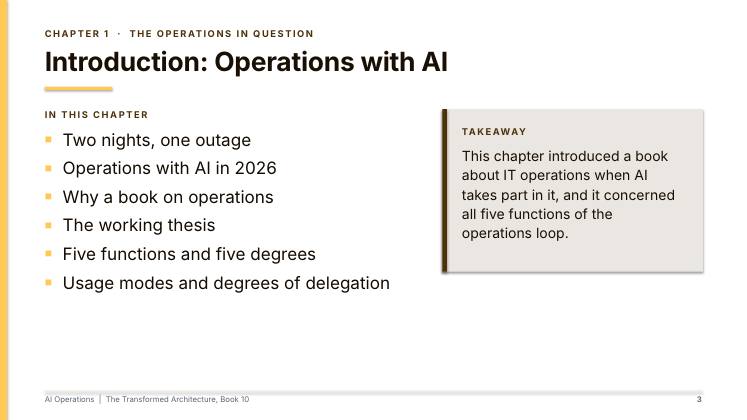
  3. Slide 3: Introduction: Operations with AI3
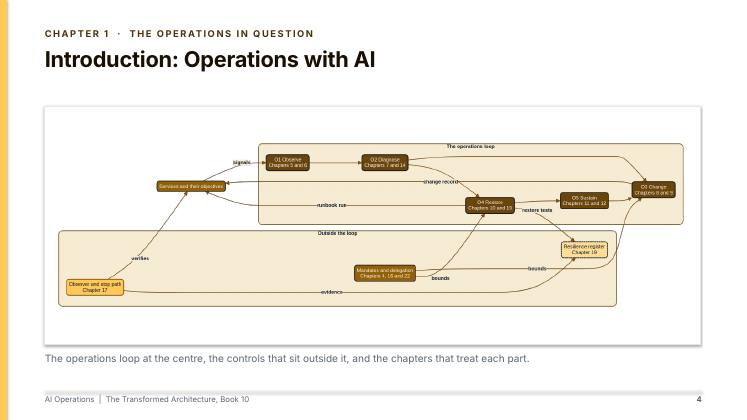
  4. Slide 4: Introduction: Operations with AI4
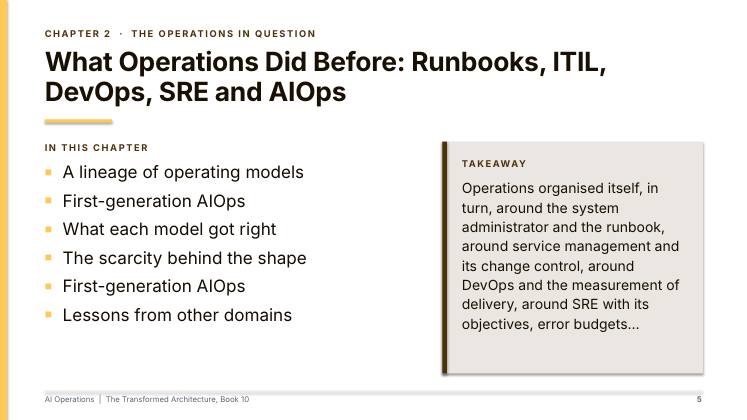
  5. Slide 5: What Operations Did Before: Runbooks, ITIL, DevOps, SRE and AIOps5
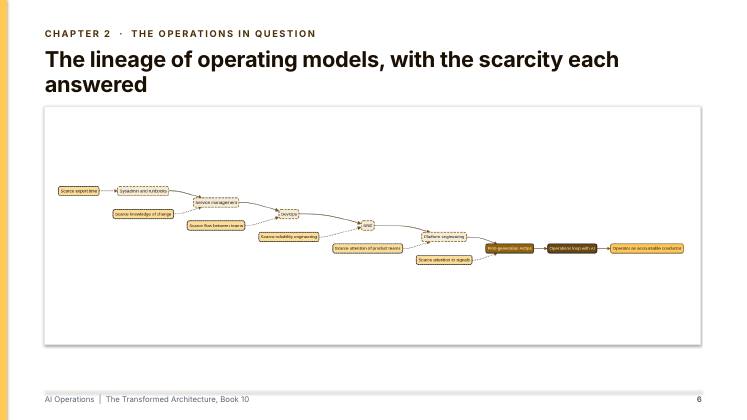
  6. Slide 6: The lineage of operating models, with the scarcity each answered6
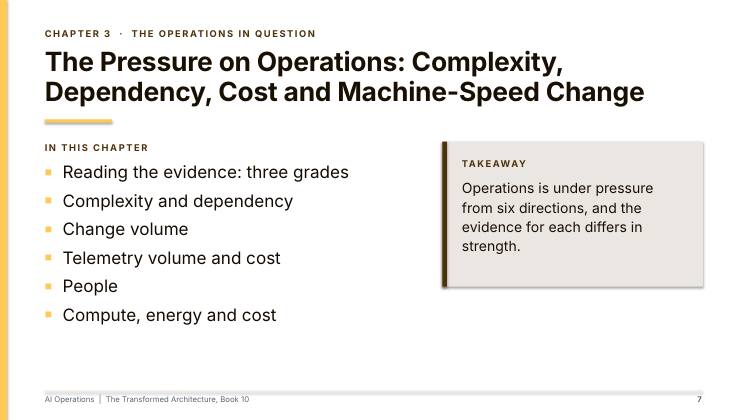
  7. Slide 7: The Pressure on Operations: Complexity, Dependency, Cost and Machine-Speed Change7
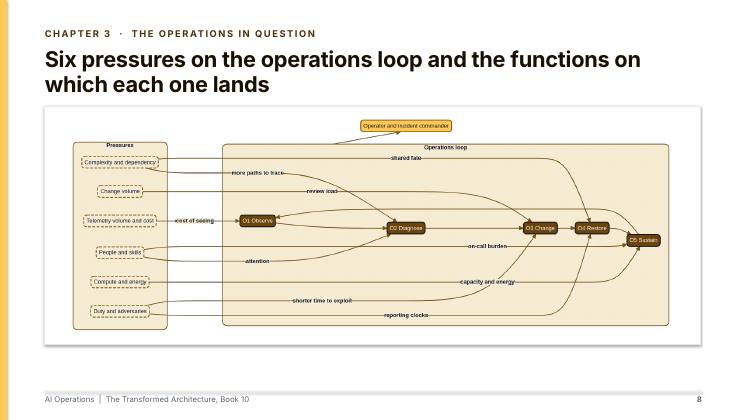
  8. Slide 8: Six pressures on the operations loop and the functions on which each one lands8
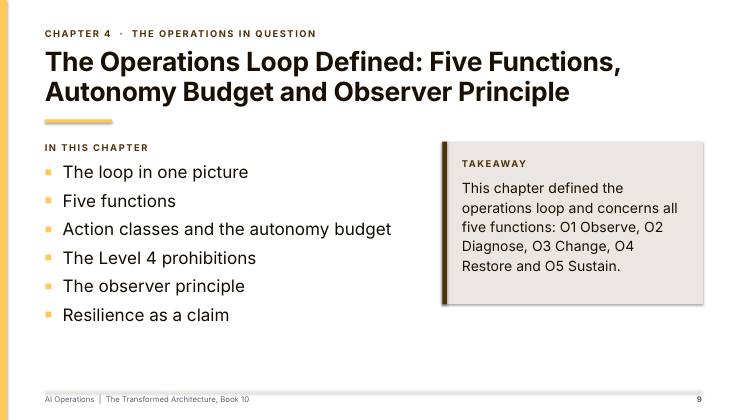
  9. Slide 9: The Operations Loop Defined: Five Functions, Autonomy Budget and Observer Principle9
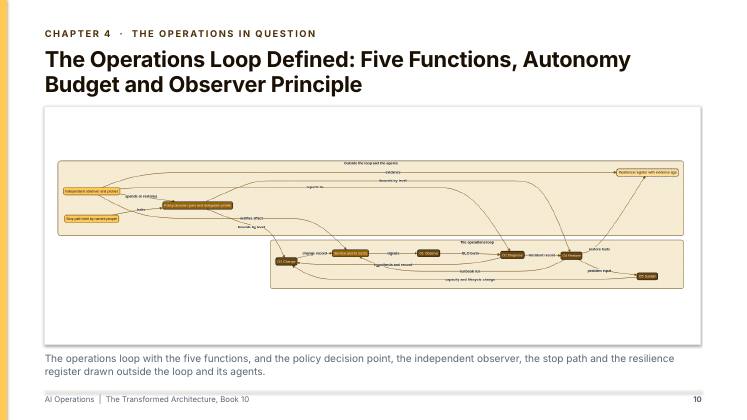
  10. Slide 10: The Operations Loop Defined: Five Functions, Autonomy Budget and Observer Principle10
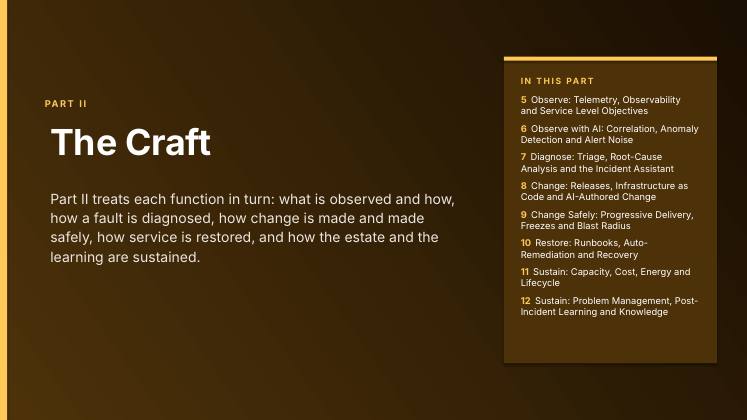
  11. Slide 11: The Craft11
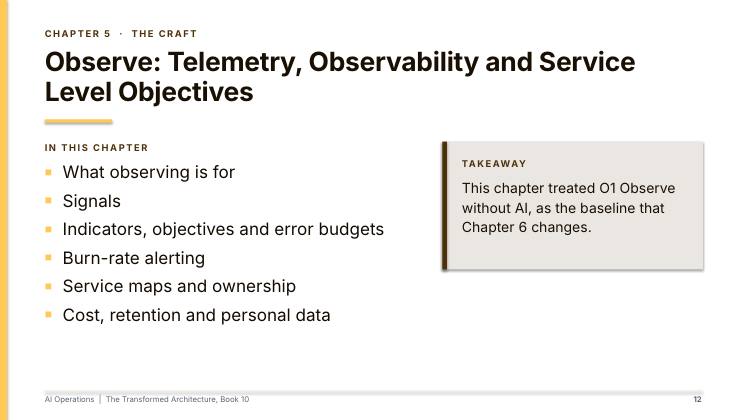
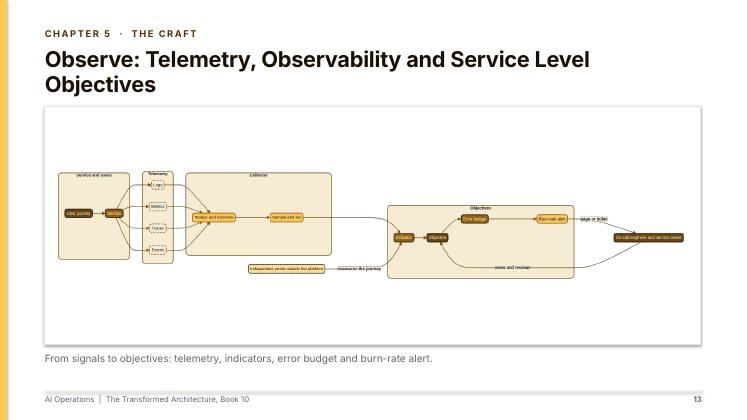
  12. Slide 12: Observe: Telemetry, Observability and Service Level Objectives12
  13. Slide 13: Observe: Telemetry, Observability and Service Level Objectives13
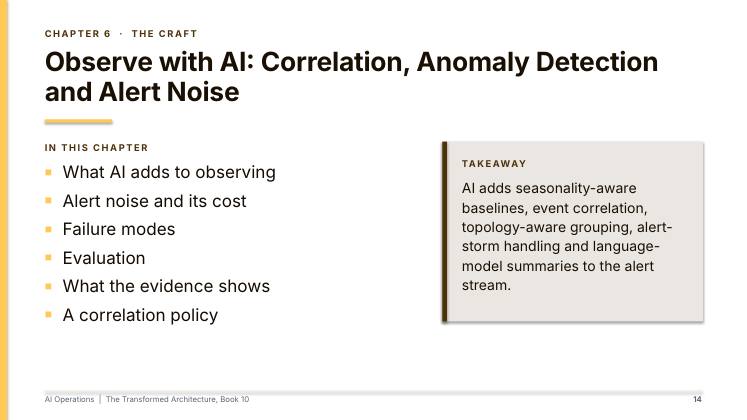
  14. Slide 14: Observe with AI: Correlation, Anomaly Detection and Alert Noise14
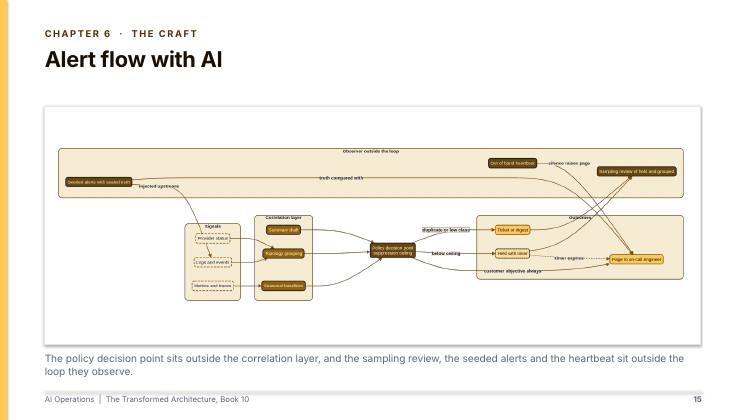
  15. Slide 15: Alert flow with AI15
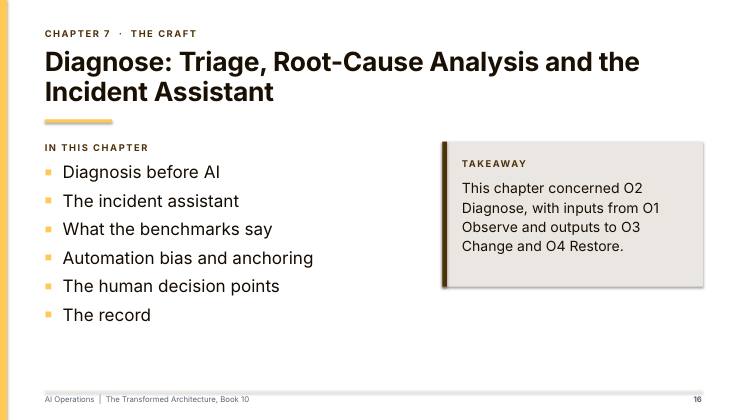
  16. Slide 16: Diagnose: Triage, Root-Cause Analysis and the Incident Assistant16
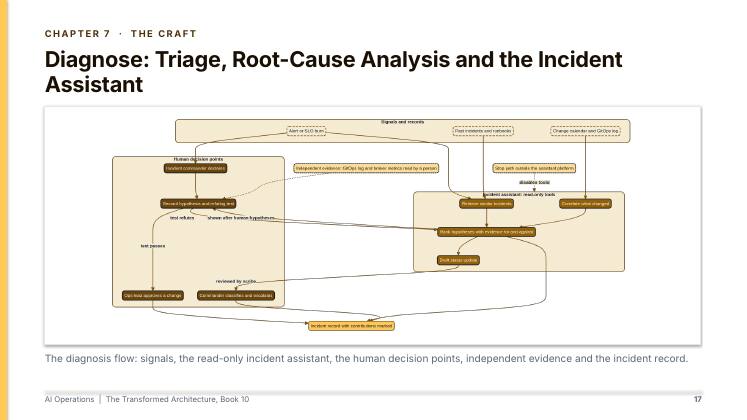
  17. Slide 17: Diagnose: Triage, Root-Cause Analysis and the Incident Assistant17
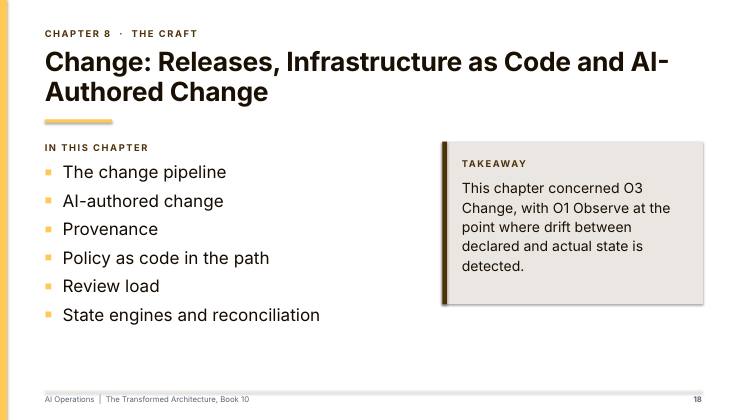
  18. Slide 18: Change: Releases, Infrastructure as Code and AI-Authored Change18
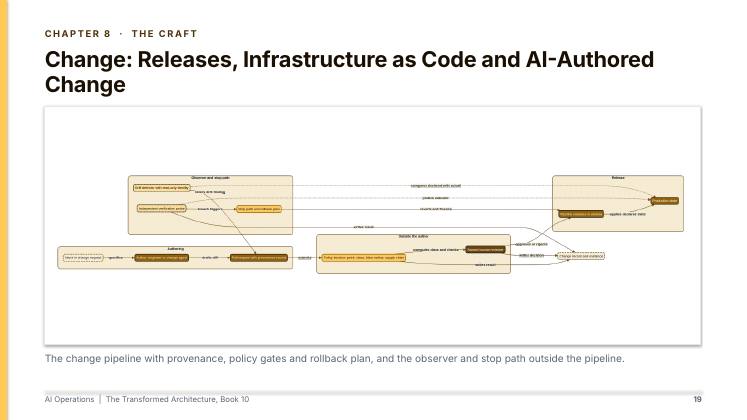
  19. Slide 19: Change: Releases, Infrastructure as Code and AI-Authored Change19
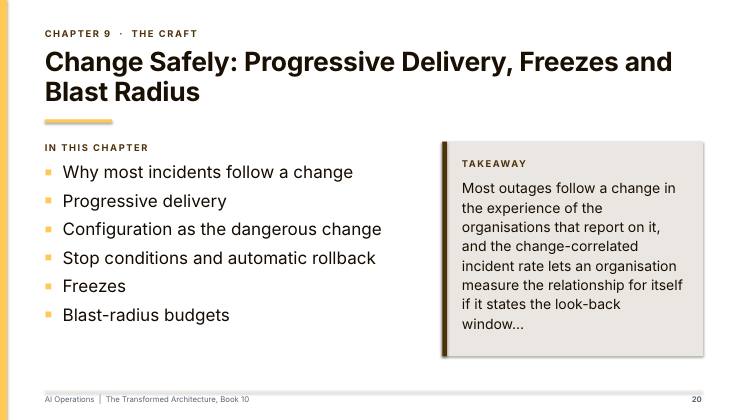
  20. Slide 20: Change Safely: Progressive Delivery, Freezes and Blast Radius20
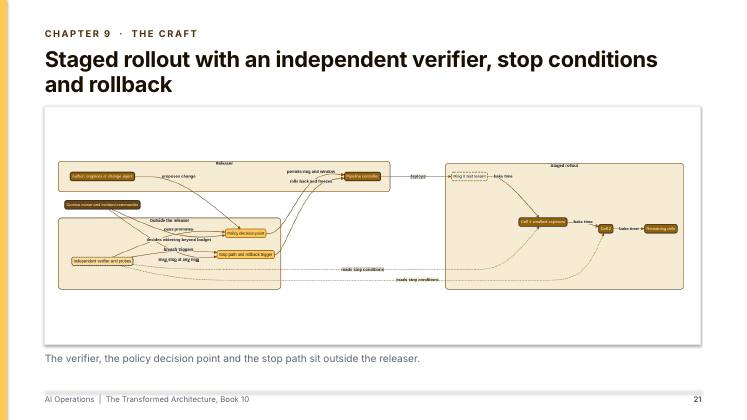
  21. Slide 21: Staged rollout with an independent verifier, stop conditions and rollback21
  22. Slide 22: Restore: Runbooks, Auto-Remediation and Recovery22
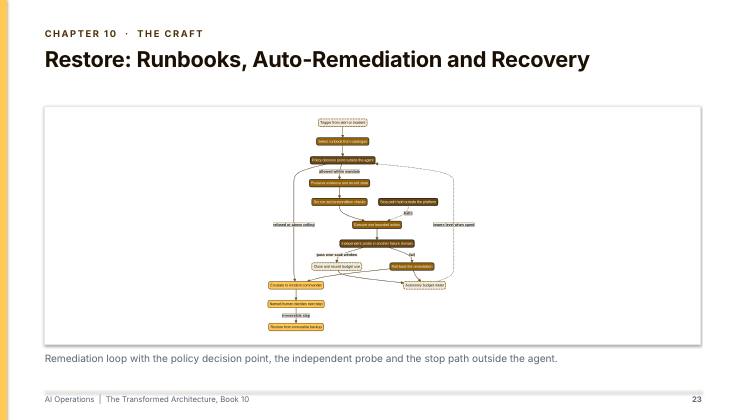
  23. Slide 23: Restore: Runbooks, Auto-Remediation and Recovery23
  24. Slide 24: Sustain: Capacity, Cost, Energy and Lifecycle24
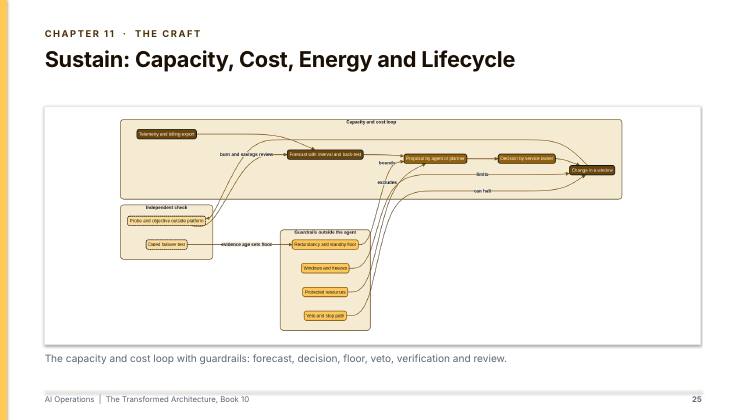
  25. Slide 25: Sustain: Capacity, Cost, Energy and Lifecycle25
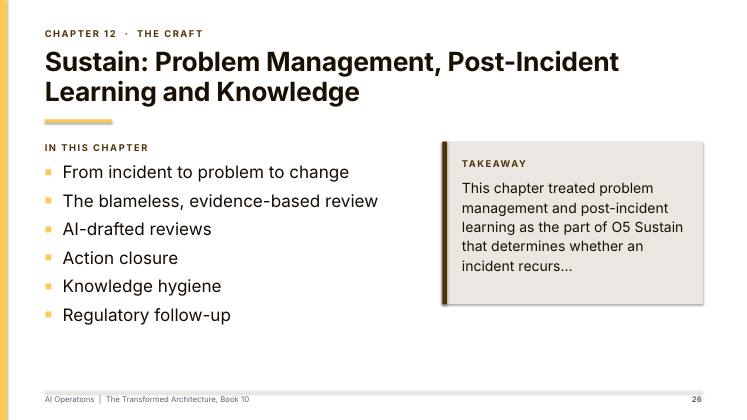
  26. Slide 26: Sustain: Problem Management, Post-Incident Learning and Knowledge26
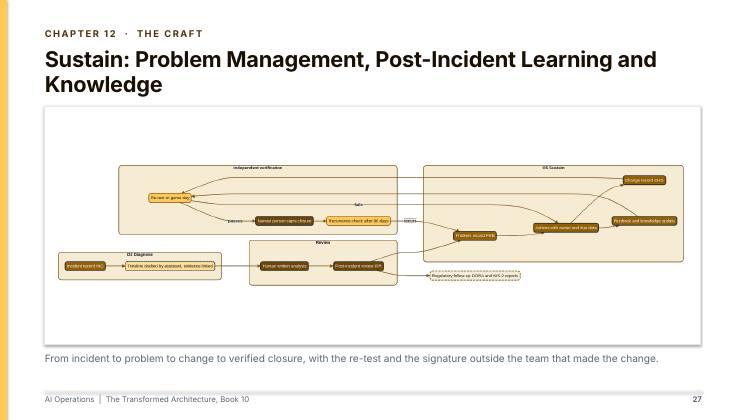
  27. Slide 27: Sustain: Problem Management, Post-Incident Learning and Knowledge27
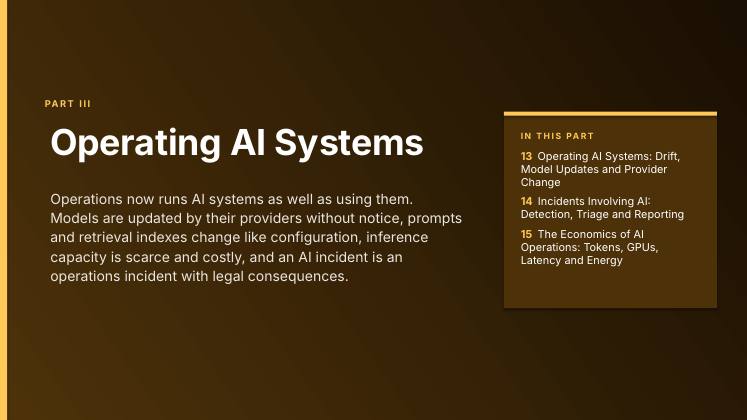
  28. Slide 28: Operating AI Systems28
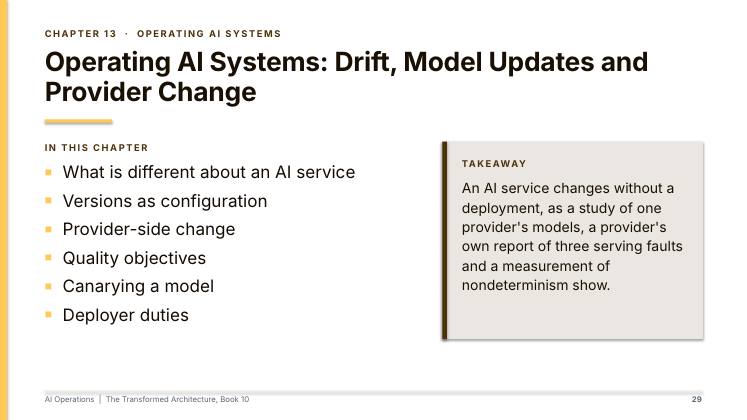
  29. Slide 29: Operating AI Systems: Drift, Model Updates and Provider Change29
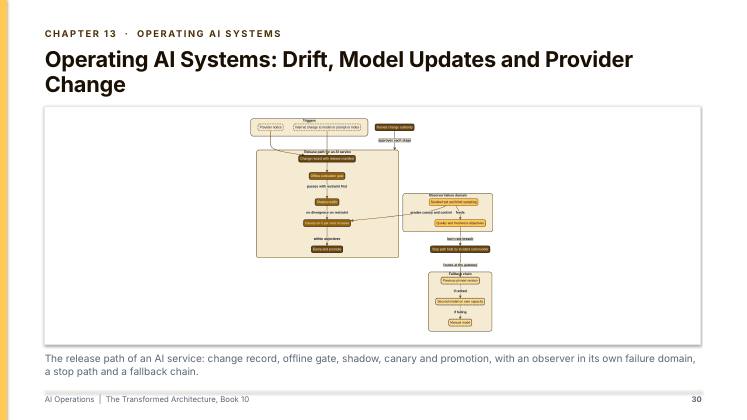
  30. Slide 30: Operating AI Systems: Drift, Model Updates and Provider Change30
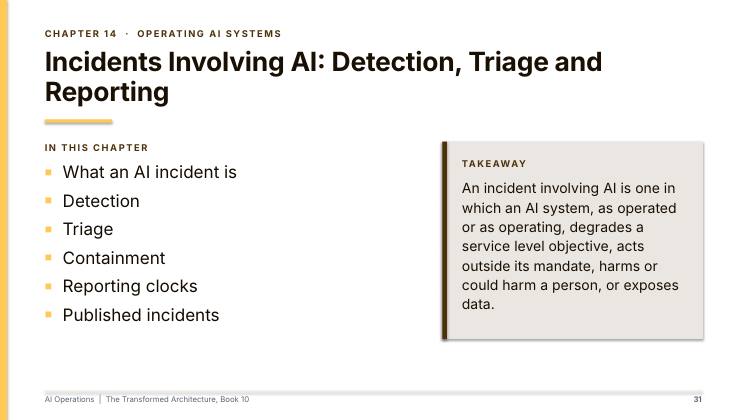
  31. Slide 31: Incidents Involving AI: Detection, Triage and Reporting31
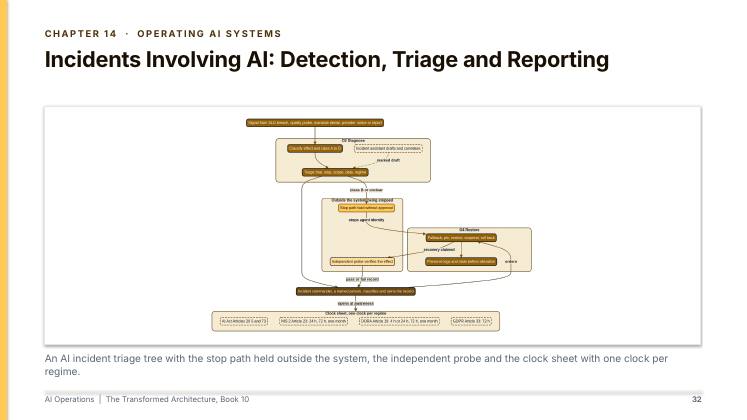
  32. Slide 32: Incidents Involving AI: Detection, Triage and Reporting32
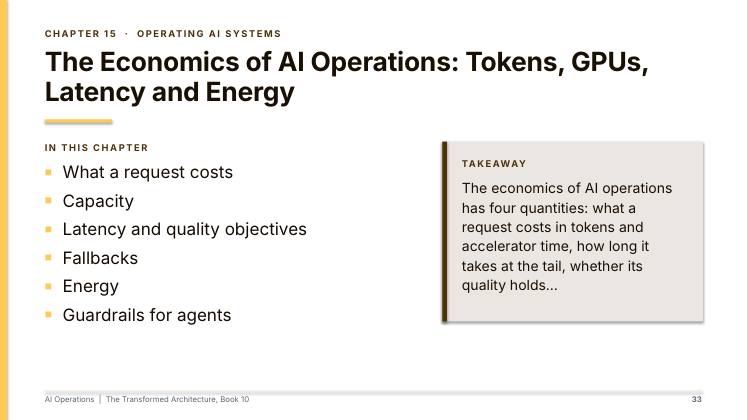
  33. Slide 33: The Economics of AI Operations: Tokens, GPUs, Latency and Energy33
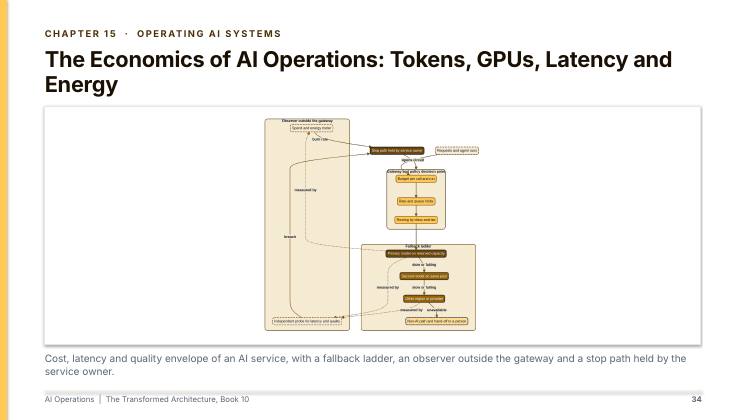
  34. Slide 34: The Economics of AI Operations: Tokens, GPUs, Latency and Energy34
  35. Slide 35: The Operator's Own AI35
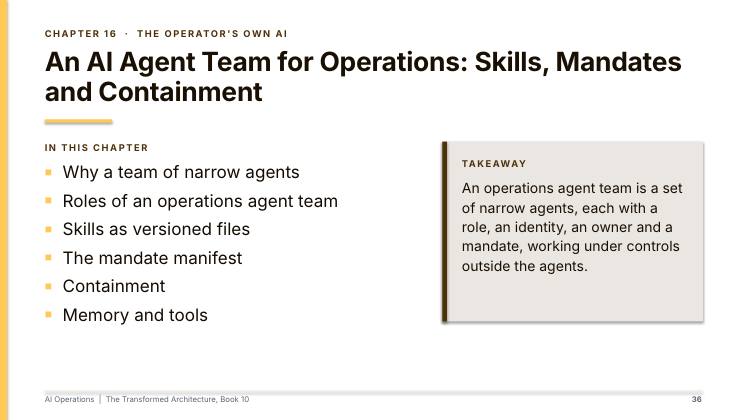
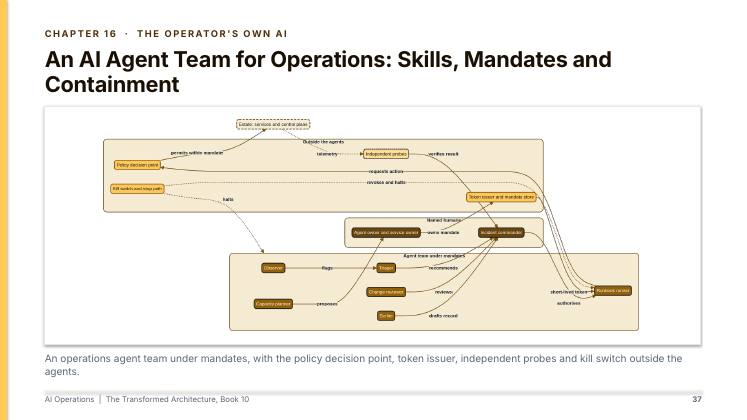
  36. Slide 36: An AI Agent Team for Operations: Skills, Mandates and Containment36
  37. Slide 37: An AI Agent Team for Operations: Skills, Mandates and Containment37
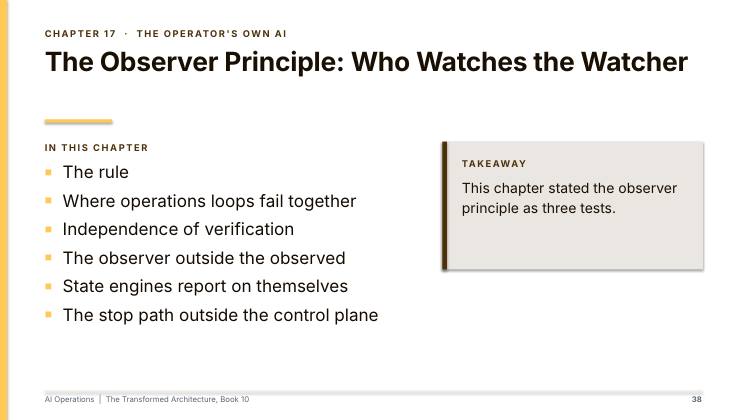
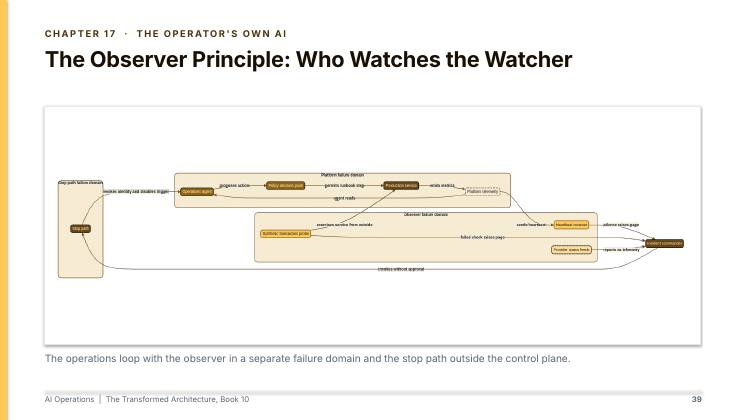
  38. Slide 38: The Observer Principle: Who Watches the Watcher38
  39. Slide 39: The Observer Principle: Who Watches the Watcher39
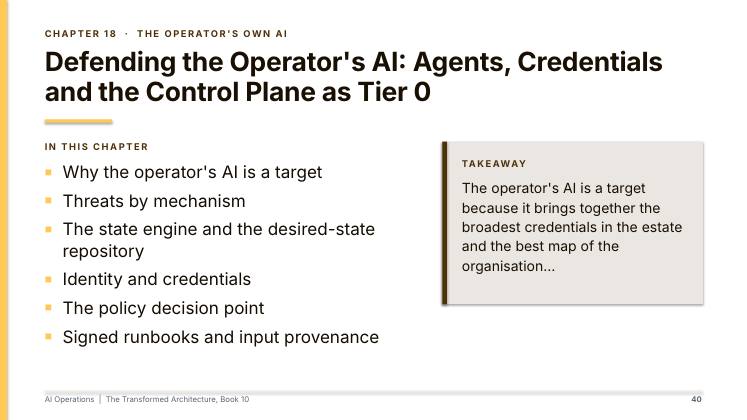
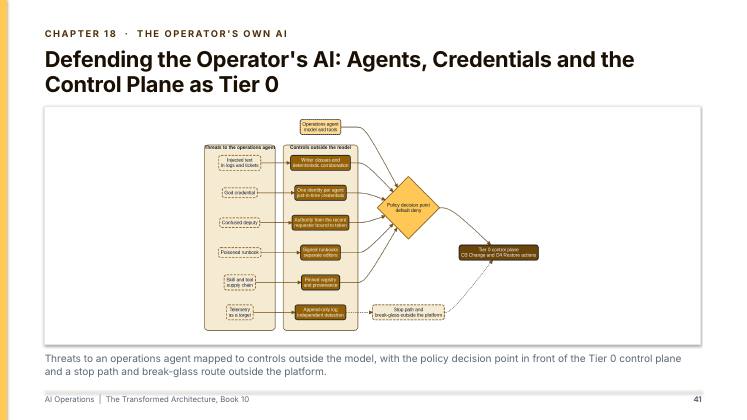
  40. Slide 40: Defending the Operator's AI: Agents, Credentials and the Control Plane as Tier 040
  41. Slide 41: Defending the Operator's AI: Agents, Credentials and the Control Plane as Tier 041
  42. Slide 42: Operations in the Organisation42
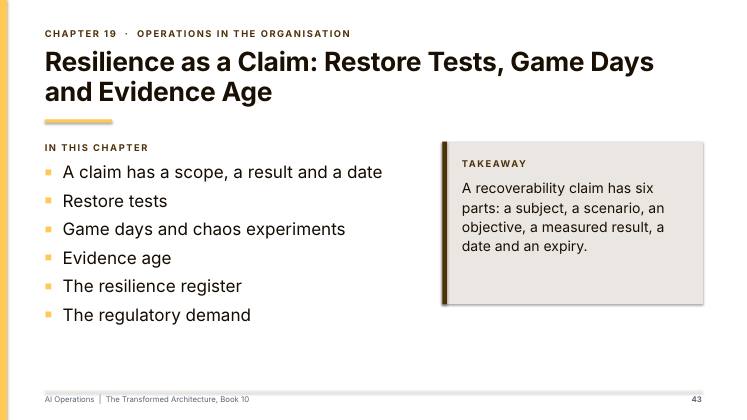
  43. Slide 43: Resilience as a Claim: Restore Tests, Game Days and Evidence Age43
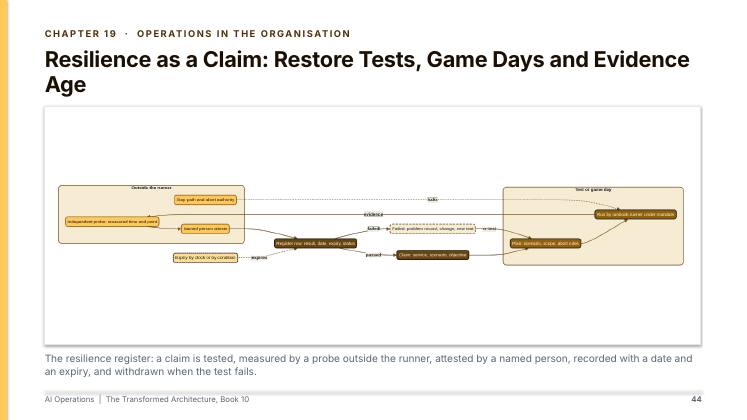
  44. Slide 44: Resilience as a Claim: Restore Tests, Game Days and Evidence Age44
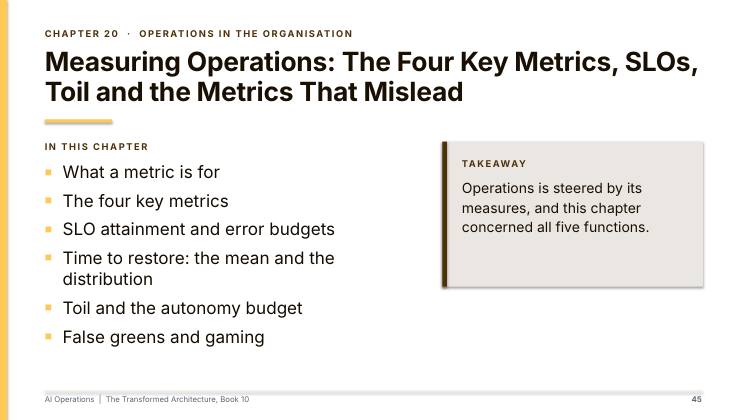
  45. Slide 45: Measuring Operations: The Four Key Metrics, SLOs, Toil and the Metrics That Mislead45
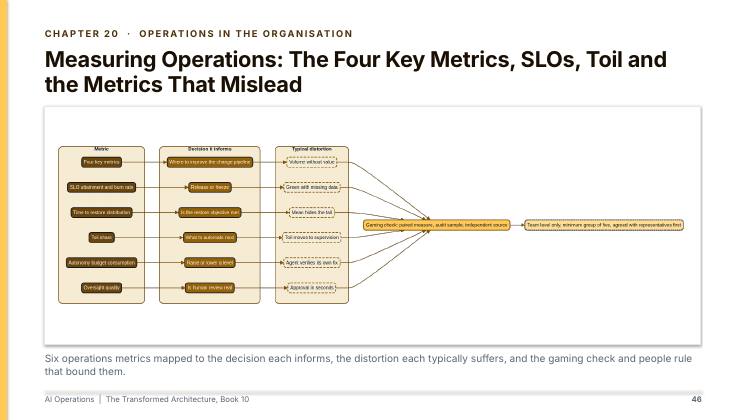
  46. Slide 46: Measuring Operations: The Four Key Metrics, SLOs, Toil and the Metrics That Mislead46
  47. Slide 47: Operating Models: Platform Teams, SRE, Managed Services and Sovereign Operations47
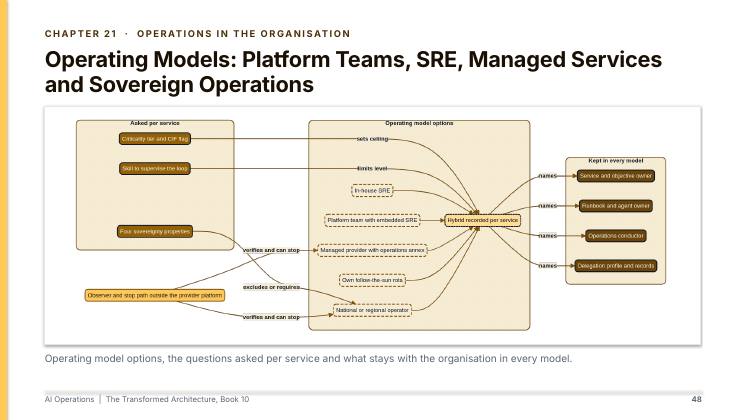
  48. Slide 48: Operating Models: Platform Teams, SRE, Managed Services and Sovereign Operations48
  49. Slide 49: Decision Rights, Change Authority and the Incident Commander49
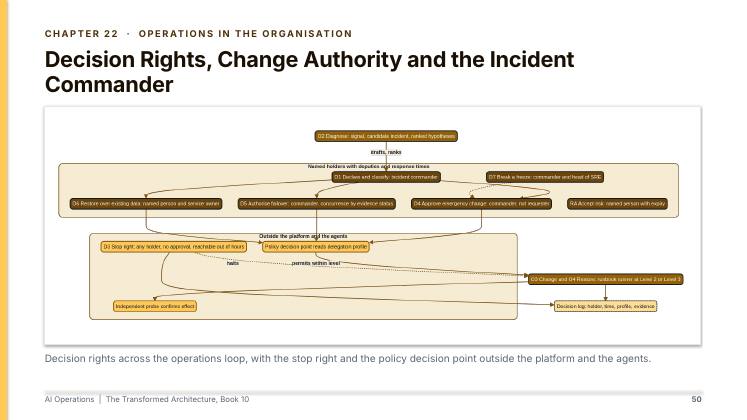
  50. Slide 50: Decision Rights, Change Authority and the Incident Commander50
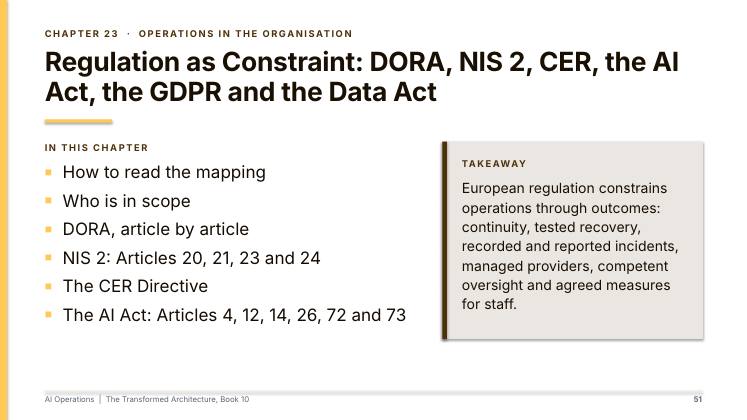
  51. Slide 51: Regulation as Constraint: DORA, NIS 2, CER, the AI Act, the GDPR and the Data Act51
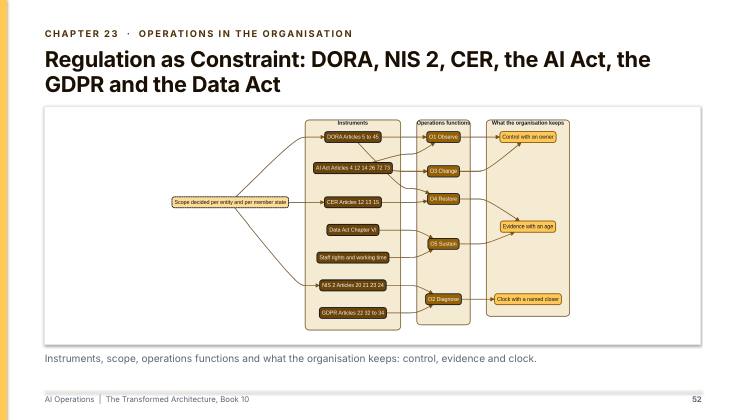
  52. Slide 52: Regulation as Constraint: DORA, NIS 2, CER, the AI Act, the GDPR and the Data Act52
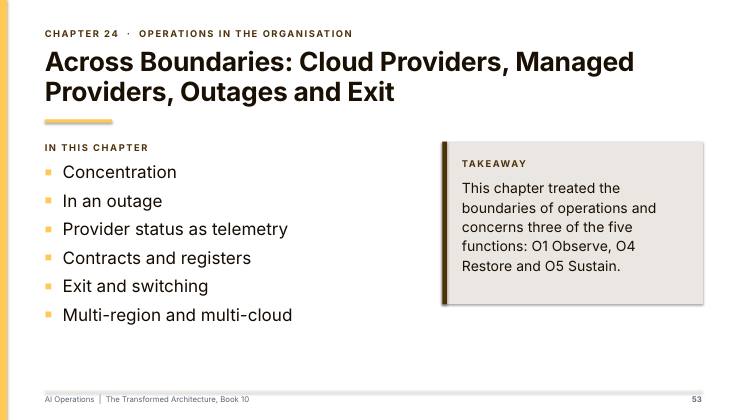
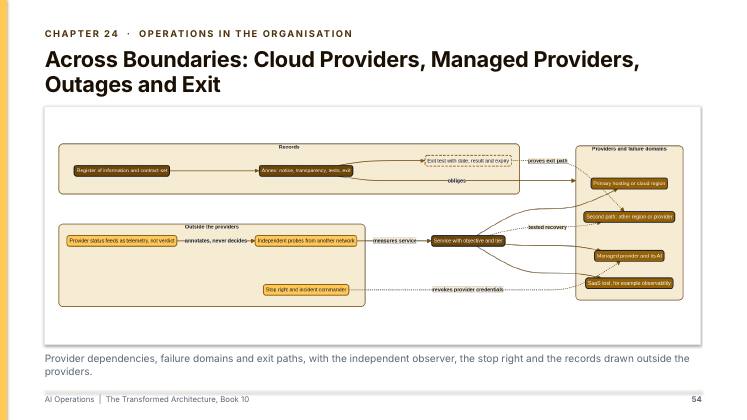
  53. Slide 53: Across Boundaries: Cloud Providers, Managed Providers, Outages and Exit53
  54. Slide 54: Across Boundaries: Cloud Providers, Managed Providers, Outages and Exit54
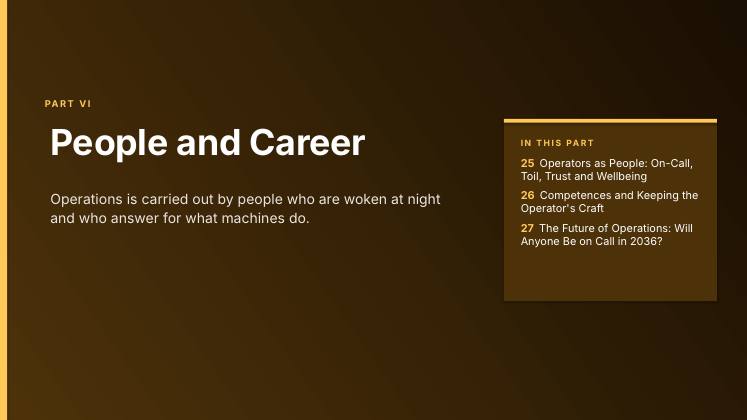
  55. Slide 55: People and Career55
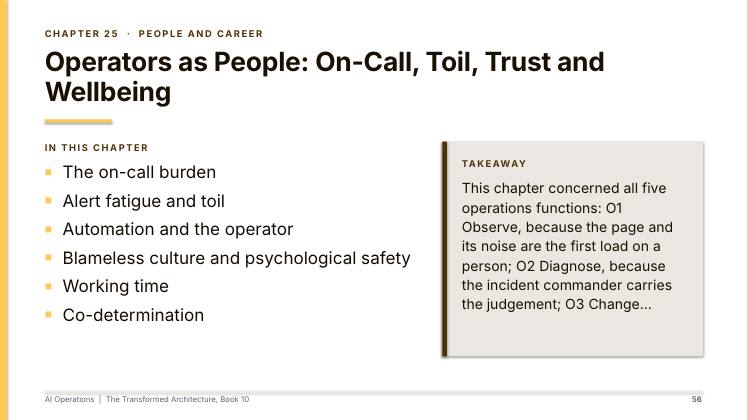
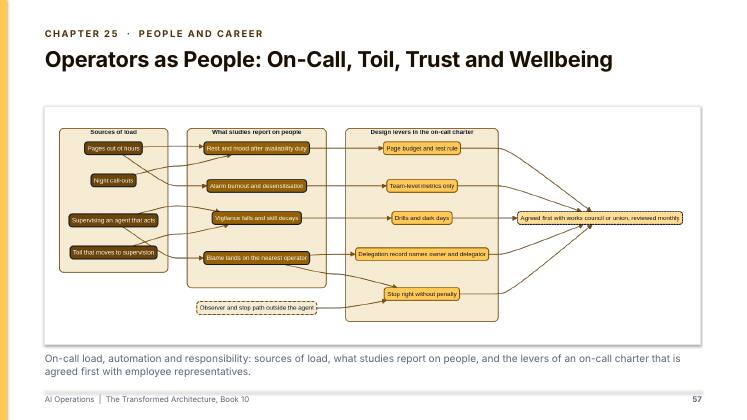
  56. Slide 56: Operators as People: On-Call, Toil, Trust and Wellbeing56
  57. Slide 57: Operators as People: On-Call, Toil, Trust and Wellbeing57
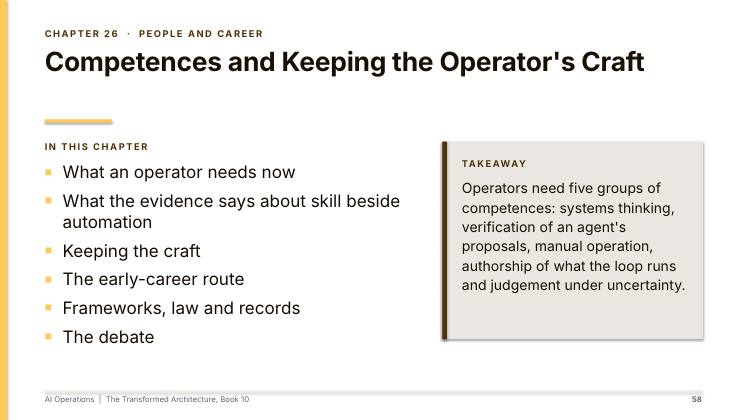
  58. Slide 58: Competences and Keeping the Operator's Craft58
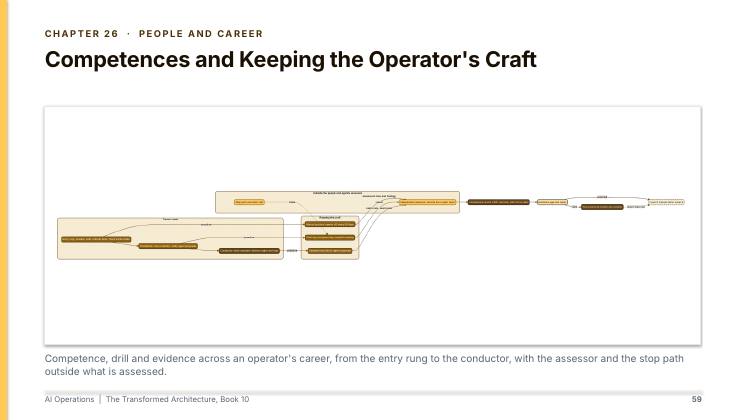
  59. Slide 59: Competences and Keeping the Operator's Craft59
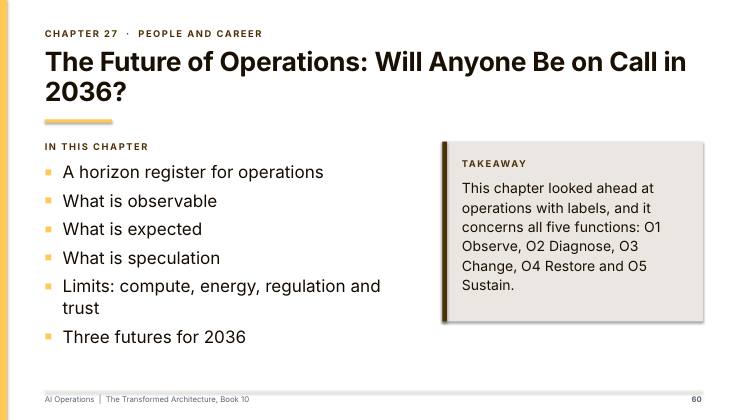
  60. Slide 60: The Future of Operations: Will Anyone Be on Call in 2036?60
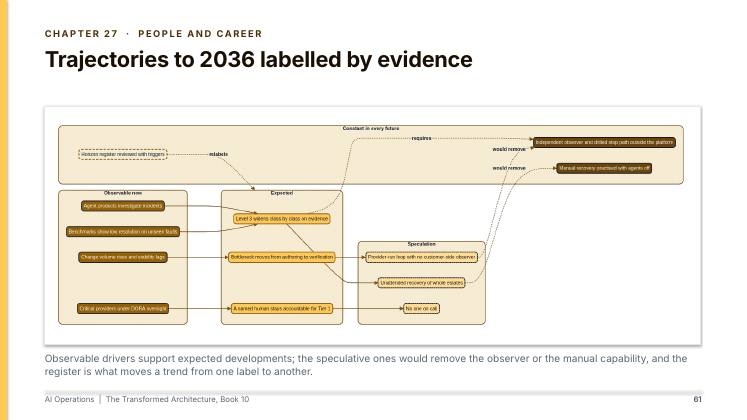
  61. Slide 61: Trajectories to 2036 labelled by evidence61
  62. Slide 62: Experience and Conclusions62
  63. Slide 63: Case Studies and Anti-Patterns63
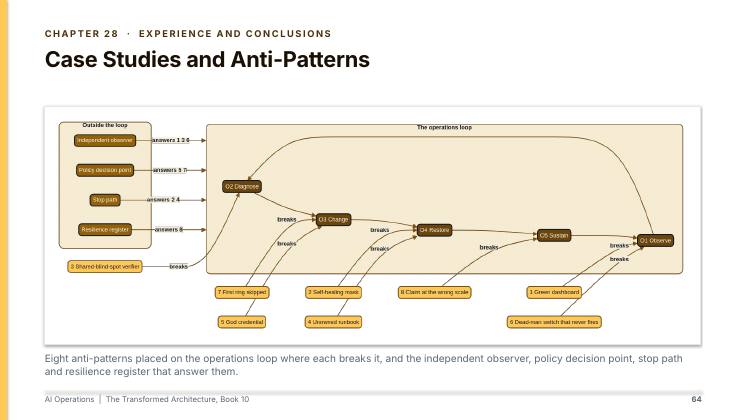
  64. Slide 64: Case Studies and Anti-Patterns64
  65. Slide 65: A Year in Operations: Nordvik Region and Hansa Mutual65
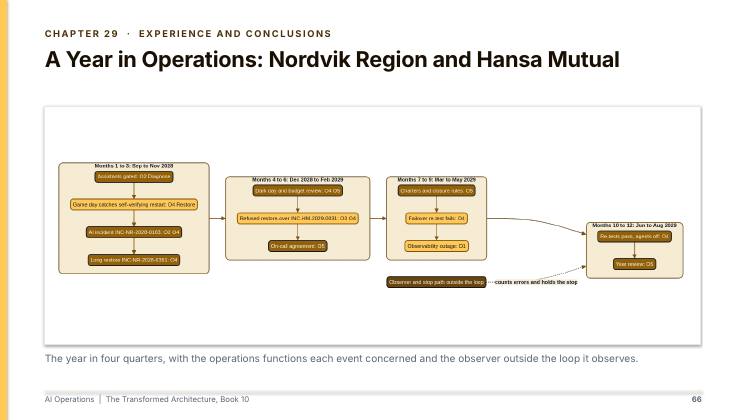
  66. Slide 66: A Year in Operations: Nordvik Region and Hansa Mutual66
  67. Slide 67: Nordvik Region and Hansa Mutual: Conclusions for Two Organisations67
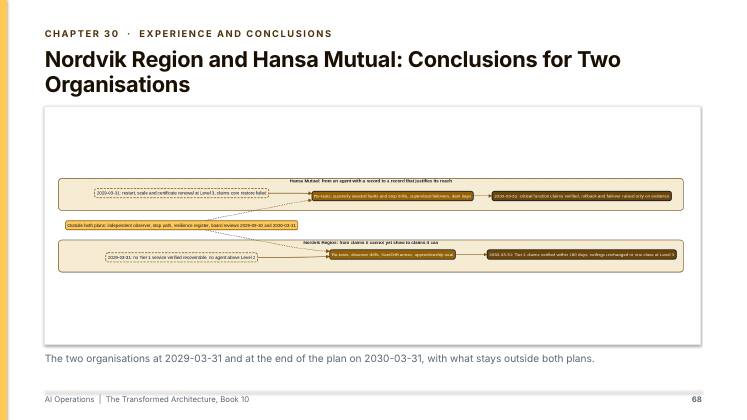
  68. Slide 68: Nordvik Region and Hansa Mutual: Conclusions for Two Organisations68
  69. Slide 69: Conclusion: Operations with AI69
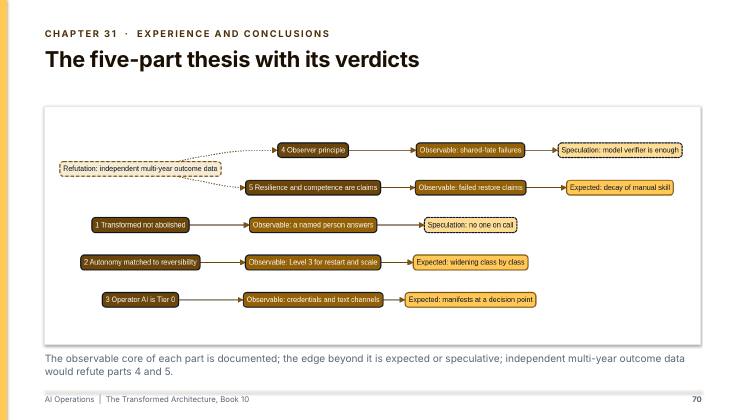
  70. Slide 70: The five-part thesis with its verdicts70
  71. Slide 71: Appendices71
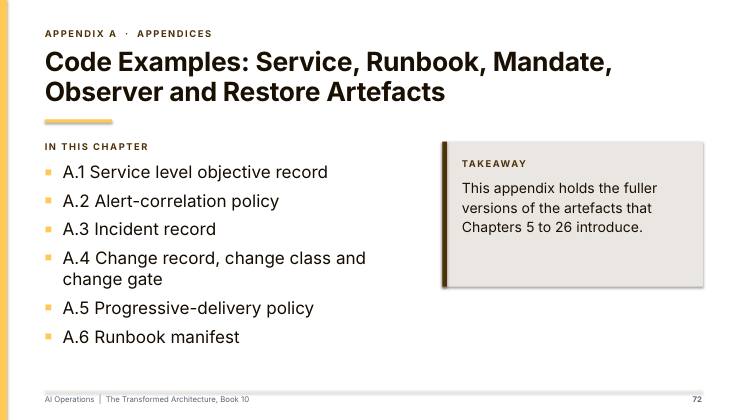
  72. Slide 72: Code Examples: Service, Runbook, Mandate, Observer and Restore Artefacts72
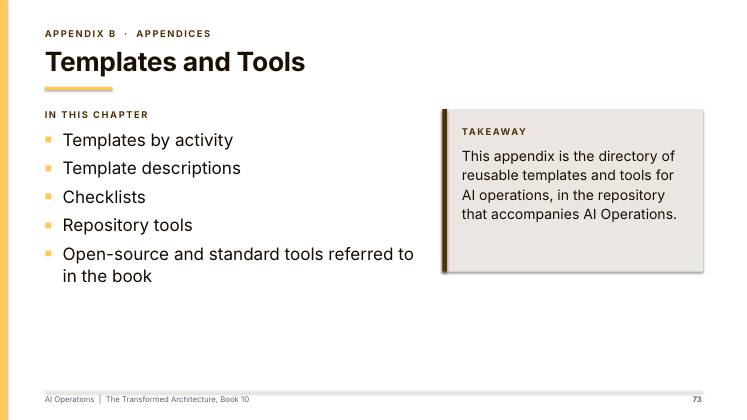
  73. Slide 73: Templates and Tools73
  74. Slide 74: AI Operations74